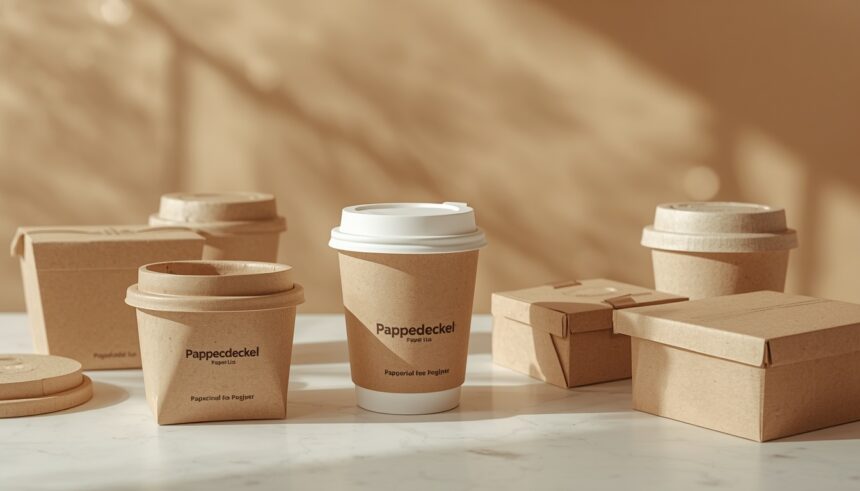
Food packaging is changing quickly as businesses look for practical ways to reduce plastic use without sacrificing convenience, product protection, or visual appeal. One solution receiving growing attention is the Pappedeckel paper lid. The term Pappedeckel is associated with paperboard or cardboard covers and lids, and today it can be used in discussions about paper-based packaging solutions for food and beverages.
Modern Pappedeckel paper lids combine simple materials with thoughtful design. They can be used with cups, takeaway containers, food boxes, and other packaging formats where a lightweight but functional lid is needed. For brands, they also create an opportunity to build a more environmentally conscious packaging identity.
This guide explains what Pappedeckel paper lids are, how they work, their benefits and limitations, applications, design considerations, and why paper-based lids are becoming increasingly relevant to modern food packaging.
What Is a Pappedeckel Paper Lid?
A Pappedeckel paper lid is a lid or cover made primarily from paperboard, cardboard, or another paper-based material. Depending on the application, the material can be shaped, folded, pressed, coated, or laminated to provide the required strength and resistance.
Unlike traditional plastic lids, paperboard lids are designed around a fiber-based structure. This makes them particularly interesting for food businesses looking to explore alternatives to conventional petroleum-based packaging components.
Pappedeckel should not be understood as one single standardized product. The exact material, thickness, coating, construction, and performance can vary according to the manufacturer and intended use.
For example, a lid designed for a dry bakery product may have very different requirements from one designed for a hot takeaway meal or beverage.
Why Are Pappedeckel Paper Lids Becoming Popular?
The packaging industry is under pressure from consumers, businesses, and regulators to reduce unnecessary plastic and improve resource efficiency. As a result, manufacturers are exploring fiber-based packaging, recyclable materials, lightweight designs, and alternative coatings.
Pappedeckel paper lids fit into this broader movement.
The appeal comes from several factors:
- Paper-based materials can provide a recognizable alternative to plastic.
- They can support recyclable packaging systems where local infrastructure allows.
- Paperboard can be printed and shaped for branding.
- Lightweight designs can help reduce material use.
- Fiber-based packaging aligns with the sustainability messaging many consumers now expect.
However, sustainability is not determined by the material name alone. The complete packaging system matters, including sourcing, manufacturing, coatings, inks, transportation, recycling infrastructure, and disposal.
1. Reducing Dependence on Conventional Plastic
One of the biggest reasons businesses investigate paper lids is the desire to reduce reliance on conventional plastic packaging.
Plastic remains useful because it is lightweight, durable, moisture-resistant, and relatively inexpensive. However, concerns about plastic waste have encouraged food-service companies to consider alternative materials.
Pappedeckel paper lids provide another option for selected applications. Instead of automatically using a plastic lid for every container, businesses can evaluate whether a paperboard solution provides adequate performance for a particular product.
This approach is especially relevant for takeaway food, bakery packaging, coffee service, and dry or semi-dry food products.
2. Better Branding and Packaging Appeal
Packaging is more than protection. It is also part of a brand’s visual identity.
Paperboard offers a useful surface for printing logos, colors, product information, patterns, and promotional messages. A well-designed Pappedeckel lid can therefore become an extension of the overall package rather than simply a functional cover.
For example, a bakery could use a printed paper lid featuring its logo and brand colors. A coffee shop could add a simple message or seasonal design. A food-delivery company could use packaging artwork that reinforces its sustainability positioning.
This creates an important advantage: the lid can contribute to both function and brand communication.
3. Supporting Sustainable Packaging Strategies
Sustainability is one of the strongest trends influencing food packaging.
Businesses are increasingly evaluating packaging according to questions such as:
- Is the material renewable?
- Can the packaging be recycled?
- Is unnecessary material being avoided?
- Can the packaging be produced efficiently?
- Does the design work with local waste-management systems?
Pappedeckel paper lids can support these goals when they are appropriately designed and paired with suitable materials.
However, businesses should avoid assuming that every paper lid is automatically environmentally friendly. Some paper products contain coatings, adhesives, or mixed materials that can affect recycling.
The most useful approach is to assess the entire packaging lifecycle, not just the visible material.
4. Lightweight Design and Efficient Packaging
Packaging manufacturers constantly balance strength with material efficiency.
A lid needs to protect the food while remaining practical to manufacture, transport, store, and use. Paperboard can be engineered into different shapes and thicknesses depending on the application.
A well-designed Pappedeckel lid may use structural features such as folds, rims, locking tabs, or reinforced sections to provide stability without unnecessarily increasing material consumption.
This type of design thinking can help businesses create packaging that is both functional and resource-conscious.
5. Applications of Pappedeckel Paper Lids
Pappedeckel-style paper lids can be relevant to several areas of food packaging.
Coffee and Beverage Packaging
Paper-based lids can be considered for takeaway cups and other beverage containers. The key requirements include secure fitting, heat resistance, leak prevention, and user safety.
Because hot beverages create demanding conditions, businesses should select products specifically tested for the intended temperature and beverage type.
Bakery Packaging
Bakeries frequently use cardboard and paperboard packaging for cakes, pastries, cookies, bread, and other products.
A paperboard lid can provide protection while also creating valuable branding space.
Takeaway Food
Restaurants and food-service businesses can use paper-based covers for selected takeaway containers. Depending on the food, the packaging may need resistance to grease, moisture, heat, and pressure.
Food Delivery
Food delivery creates additional packaging challenges because products may spend considerable time in transit.
A suitable Pappedeckel design can help keep the package closed and presentable while providing a surface for branding, instructions, or product information.
Retail Food Packaging
Paperboard lids can also be incorporated into retail packaging for products such as snacks, dry foods, bakery products, and specialty foods.
The exact design depends on shelf life, product characteristics, storage conditions, and packaging regulations.
Pappedeckel vs Plastic Lids
The choice between paperboard and plastic should be based on the specific packaging application rather than a simple assumption that one material is always better.
| Feature | Pappedeckel Paper Lid | Plastic Lid |
| Main material | Paperboard/cardboard | Plastic polymers |
| Branding surface | Generally strong | Depends on design |
| Lightweight potential | High | High |
| Moisture resistance | Depends on coating/design | Generally strong |
| Heat performance | Application-specific | Application-specific |
| Recycling | Depends on local system and construction | Depends on polymer and local system |
| Sustainability potential | Strong for suitable applications | Varies significantly |
| Design flexibility | High | High |
The important point is that performance and end-of-life options depend on the exact product. A poorly designed paper lid may not be a better choice for a particular application, while a well-designed fiber-based lid can perform effectively where conditions are suitable.
Challenges of Pappedeckel Paper Lids
Although paper-based lids offer several advantages, they also have limitations.
Moisture and Grease
Paper naturally absorbs moisture unless it is treated or protected. Food packaging therefore may require specialized coatings or structures to prevent leakage and loss of strength.
Heat Resistance
Hot food and beverages require materials that can maintain their shape and safety under elevated temperatures. Not every paperboard lid is suitable for hot applications.
Structural Strength
A lid must remain secure during handling, transportation, stacking, and use. Manufacturers need to select the correct material thickness and structural design.
Recycling Complexity
Some paper packaging includes coatings, adhesives, plastic components, or other materials. These combinations can influence whether the final product is accepted by local recycling facilities.
Therefore, recyclability should always be verified for the specific packaging construction and local waste system.
How Pappedeckel Design Is Evolving
The future of paper-based packaging is not simply about replacing plastic with cardboard. Modern packaging design is increasingly focused on material efficiency, functionality, recyclability, and user experience together.
Manufacturers are experimenting with improved fiber structures, water- and grease-resistant solutions, better closures, printing technologies, and packaging formats that use fewer components.
Another important trend is customization. Brands want packaging that is instantly recognizable while remaining practical for large-scale production.
This means the future Pappedeckel lid may be designed not only as a protective cover but also as a communication and branding tool.
How Businesses Can Choose the Right Paper Lid
Before switching to a Pappedeckel paper lid, businesses should evaluate several factors.
- Product type: Determine whether the package contains dry, wet, greasy, frozen, or hot food.
- Temperature: Check whether the lid is designed for the expected serving, storage, and transportation temperatures.
- Fit: A secure closure is essential for takeaway and delivery packaging.
- Material composition: Understand the paperboard, coatings, adhesives, and other components.
- Recycling requirements: Check whether the packaging is accepted by the recycling infrastructure available to your customers.
- Food-contact compliance: Packaging intended to touch food should meet the applicable food-contact requirements in the market where it is sold.
- Branding: Consider whether the lid provides enough space for logos, instructions, product information, or promotional messaging.
- Cost: Compare not only the unit price but also storage, transportation, production, and disposal considerations.
The Future of Pappedeckel Paper Packaging
The demand for alternative packaging materials is likely to continue influencing food-service and retail packaging. Paperboard solutions have an opportunity to become more sophisticated as manufacturers improve barrier properties, structural strength, printing, and production efficiency.
At the same time, businesses are becoming more careful about sustainability claims. Simply labeling a product “eco-friendly” is not enough. Companies increasingly need to understand what their packaging is made from, how it performs, and what happens after disposal.
Pappedeckel paper lids are therefore part of a much larger movement toward better-designed, more resource-conscious packaging.
Their long-term success will depend on whether they can combine environmental considerations with the practical requirements of modern food businesses.
Conclusion
Pappedeckel paper lids are becoming an interesting part of the evolution of modern food packaging. Their combination of paper-based construction, design flexibility, branding potential, and suitability for selected food-service applications makes them worth considering as businesses explore alternatives to conventional plastic packaging.
However, the best packaging decision is not simply about choosing paper over plastic. Businesses should consider product protection, food safety, durability, material composition, manufacturing, cost, recyclability, and the local waste-management system.
As packaging technology continues to develop, Pappedeckel-style paper lids may become increasingly sophisticated. For food brands, restaurants, bakeries, cafés, and packaging manufacturers, the opportunity is to create solutions that are functional, attractive, efficient, and genuinely appropriate for their intended use.
FAQs
What is a Pappedeckel paper lid?
A Pappedeckel paper lid is a paperboard or cardboard-based cover designed for packaging applications. Its exact construction and performance depend on the intended product and manufacturer.
Are Pappedeckel lids better than plastic lids?
Not in every situation. Paperboard lids can offer sustainability and branding advantages, but plastic may provide better moisture or durability performance for certain applications. The right choice depends on the product and packaging requirements.
Are Pappedeckel paper lids recyclable?
Some are recyclable, but recyclability depends on the complete material construction, coatings, adhesives, and local recycling facilities. Always check the manufacturer’s specifications and local recycling guidance.
Can Pappedeckel lids be used for hot food?
Some can, but not all. Hot-food applications require lids specifically designed and tested for elevated temperatures, moisture, and grease.
Why are brands interested in Pappedeckel packaging?
Brands are interested because paperboard lids can combine practical packaging functions with customizable design and, for suitable constructions, potential sustainability benefits.